read 718

read 718

Grant Years

2026

Program Strategy

education

Location

New York, NY

Read 718 Logo
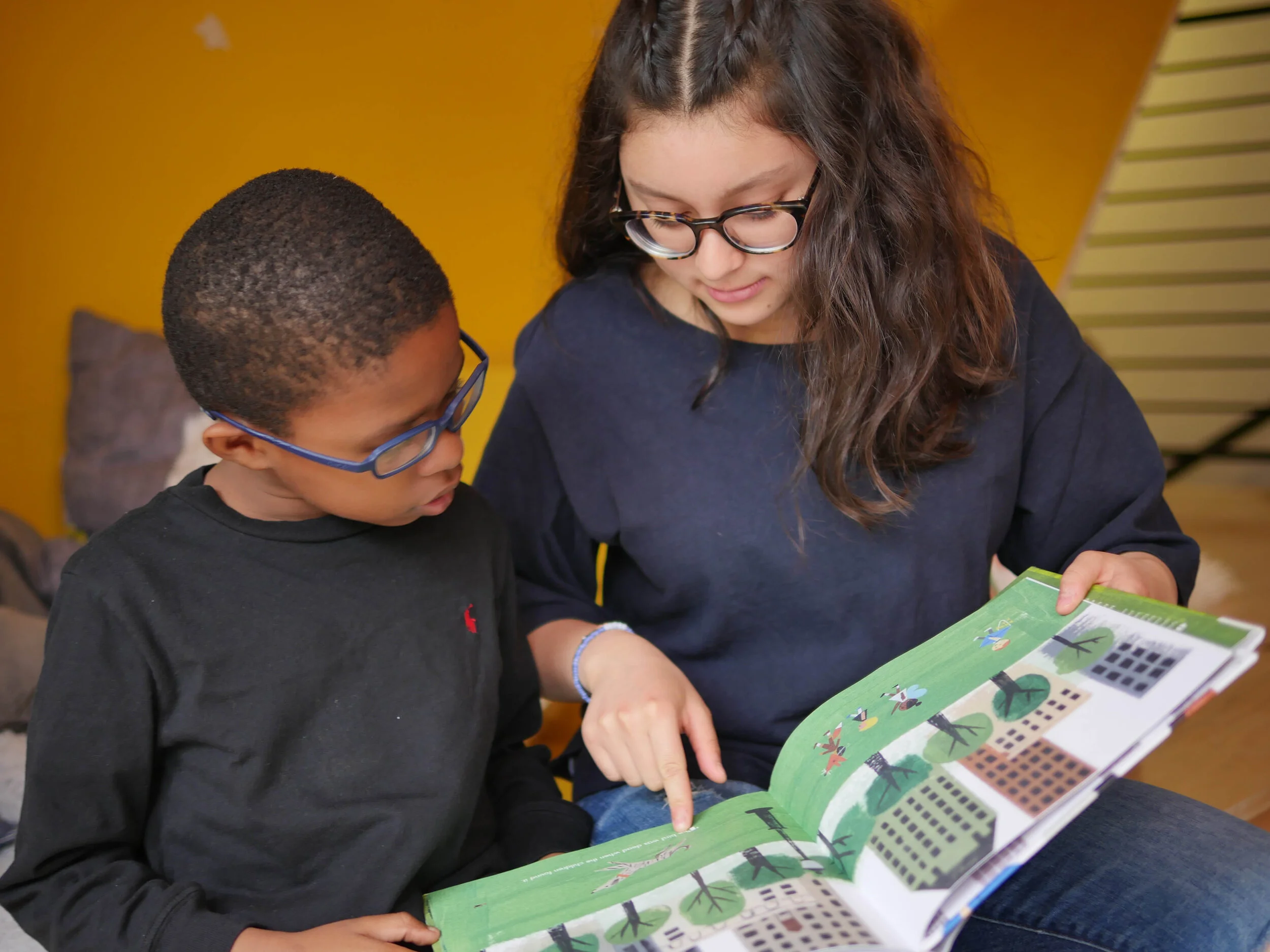
Read 718 Tutor with Student

The Challenge

Reading scores among American children have fallen to their lowest point in decades.

Forty percent of fourth graders nationwide scored below basic on the national reading assessment, the largest share in more than twenty years. Those losses are not spread evenly: the strongest readers are holding steady while the weakest fall further and further behind.

The weakest readers are overwhelmingly children from low-income families and children learning English as a new language; in New York City, just 12.5 percent of English language learners met the reading proficiency bar in 2025. Even though the city has made encouraging gains overall, more than four in ten students in grades 3 through 8 are not reading proficiently.


Reading is the skill every other opportunity is built on. By middle school, every subject requires a child to read in order to learn: science, history, even math word problems.

Forty percent of fourth graders nationwide scored below basic on the national reading assessment, the largest share in more than twenty years. Those losses are not spread evenly: the strongest readers are holding steady while the weakest fall further and further behind.

The weakest readers are overwhelmingly children from low-income families and children learning English as a new language; in New York City, just 12.5 percent of English language learners met the reading proficiency bar in 2025. Even though the city has made encouraging gains overall, more than four in ten students in grades 3 through 8 are not reading proficiently.


Reading is the skill every other opportunity is built on. By middle school, every subject requires a child to read in order to learn: science, history, even math word problems.

A student who cannot read at grade level struggles everywhere at once and is far more likely to leave school without graduating. And without intervention, the gap doesn't hold steady. It widens.

That is what makes literacy a justice issue and not just an education issue. The intervention that works, individualized one-to-one instruction, is exactly the one most families can't afford. Families with means hire tutors and reading specialists. Families without them watch their children fall further behind through no fault of their own. Which family a child is born into should not determine whether they learn to read. Right now, it largely does.

The crisis is national. The response, where it's working, is local: block by block, neighborhood by neighborhood, one organization at a time.

A student who cannot read at grade level struggles everywhere at once and is far more likely to leave school without graduating. And without intervention, the gap doesn't hold steady. It widens.

That is what makes literacy a justice issue and not just an education issue. The intervention that works, individualized one-to-one instruction, is exactly the one most families can't afford. Families with means hire tutors and reading specialists. Families without them watch their children fall further behind through no fault of their own. Which family a child is born into should not determine whether they learn to read. Right now, it largely does.

The crisis is national. The response, where it's working, is local: block by block, neighborhood by neighborhood, one organization at a time.

the solution

How it works

READ 718 was founded in 2015 by a former Brooklyn public school English teacher who watched her students' reading struggles ripple through everything else they did. Her answer was a literacy program built on a simple pairing: one student, one trained volunteer tutor, twice a week, for ten-week cycles.

01

an assessment

AN ASSESSMENT

Every student begins with an assessment, and every student gets an individualized instruction plan built from it. Each child also has their own binder holding their assessment, lesson plans, and progress notes, so that no session is ever lost and the work always picks up exactly where it left off.

02

One student & one tutor

ONE STUDENT & ONE TUTOR

Each child is paired with one volunteer tutor who stays with them for the entire ten-week cycle, and the pairings are made with care: the team works to match each student with a tutor they will click with. Many of these relationships carry across multiple cycles, some for years.
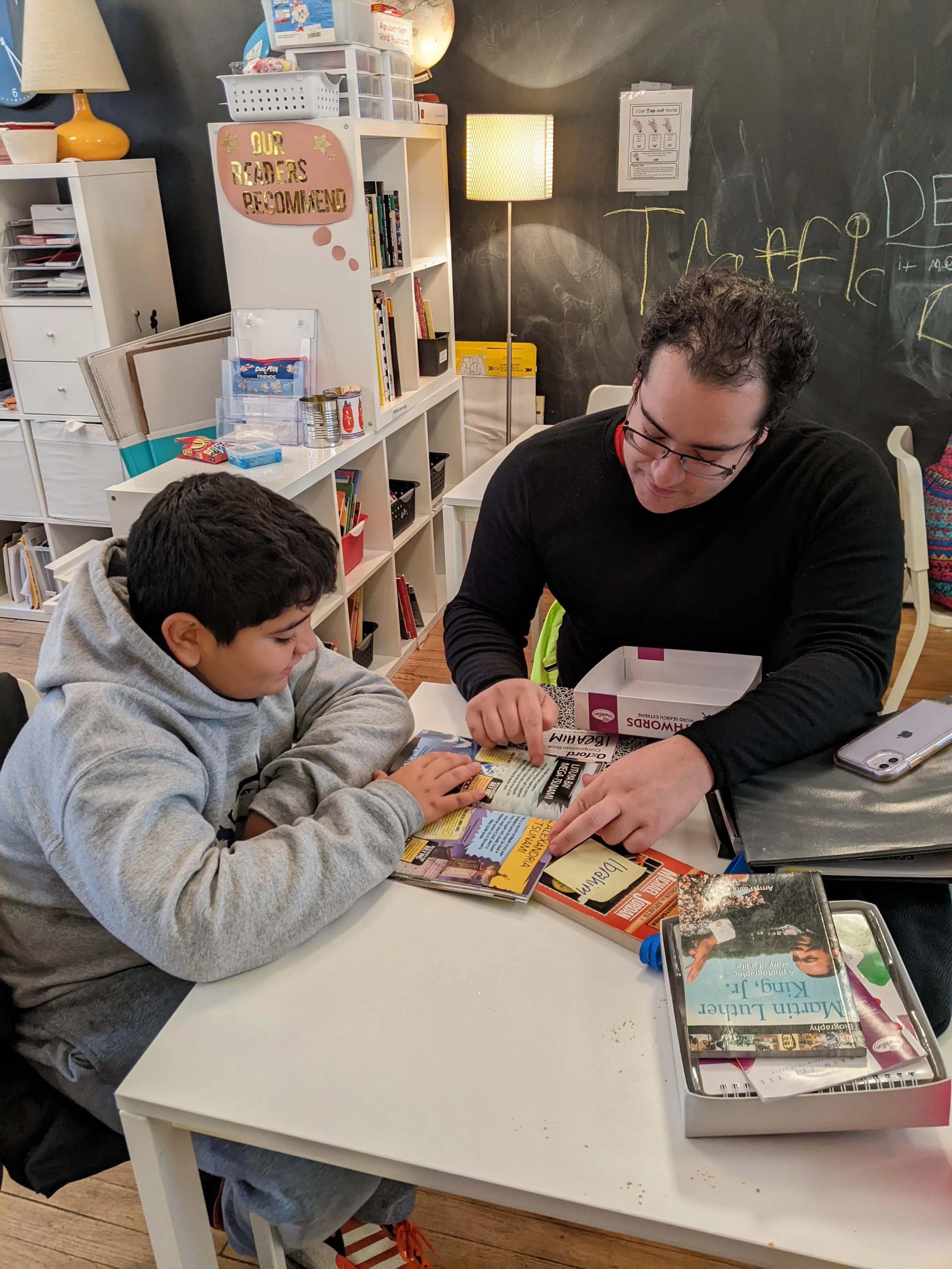
Read 718 Tutor and Reader Reading
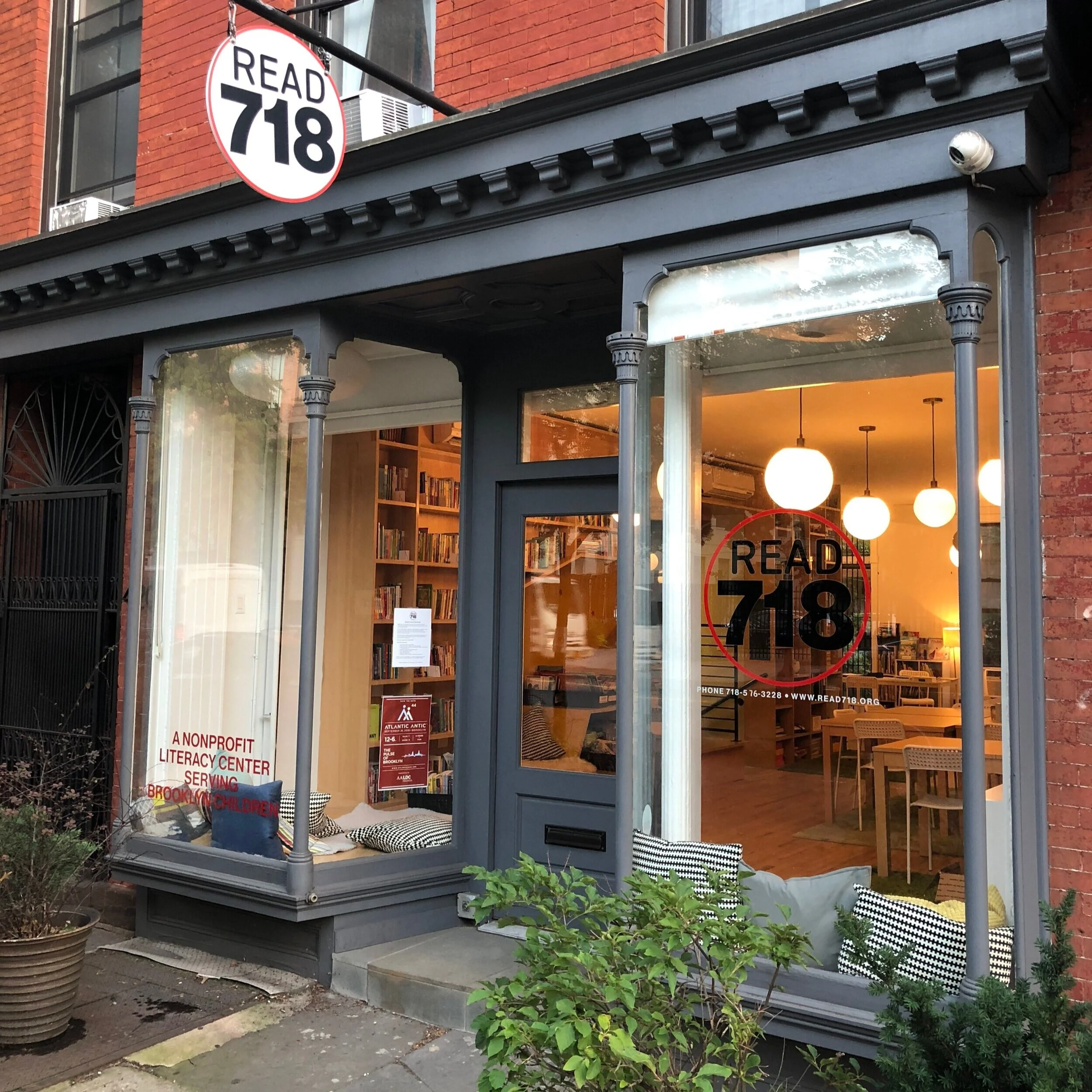
Read 718 Boreum Hill Location

03

Real instruction & books they love

REAL INSTRUCTION & BOOKS THEY LOVE

The instruction is structured and sequenced, moving through phonics, decoding, independent reading, and read-alouds, using genuinely good books that staff choose to match each student's own interests, because a child reads differently when the book is about something they already love.

04

Volunteers

VOLUNTEERS

Volunteers are trained before they ever sit down with a student and supported long after, with workshops on topics like dyslexia and IEPs and regular sessions where tutors trade strategies with staff and each other.

05

RooteD in the neighborhood

ROOTED IN THE NEIGHBORHOOD

READ 718 belongs to the neighborhood, not to a school system. Most literacy programs operate inside school buildings, serving only the students enrolled there. READ 718 is community-based: any student who meets the program's requirements (reading below grade level, from a low-income household, and in grades 3 through 8) can walk in, no matter which school they attend, and any volunteer can raise their hand. Its storefront literacy centers in Boerum Hill and Bed-Stuy make it discoverable the way a neighborhood shop is, and READ 718 Remote Program extends the same model online. And the grades 3 through 8 focus is deliberate: those are the students who have largely fallen through the cracks of a field concentrated on the earliest grades.

Results

Since opening its doors in 2015, READ 718 has provided tens of thousands of hours of one-to-one and small group literacy instruction to over 850 children and trained over 1,000 community volunteers.

Since opening its doors in 2015, READ 718 has provided tens of thousands of hours of one-to-one and small group literacy instruction to over 850 children and trained over 1,000 community volunteers.

The model is intensive and relationship-based. READ 718 prioritizes depth over scale, and students' progress reflects that: recent results show that 70 percent of students demonstrated above-average growth in their foundational literacy skills, including 12 percent who achieved exceptional growth. Importantly, the remaining 30 percent of students made typical gains, meaning that 100 percent of students are making measurable progress, with 70 percent exceeding expected rates of improvement.


Nearly all of the students served come from low-income families, and about half have individualized education plans. Today the organization is serving more students than at any point in its history, with programs full and waiting lists behind them.

The model is intensive and relationship-based. READ 718 prioritizes depth over scale, and students' progress reflects that: recent results show that 70 percent of students demonstrated above-average growth in their foundational literacy skills, including 12 percent who achieved exceptional growth. Importantly, the remaining 30 percent of students made typical gains, meaning that 100 percent of students are making measurable progress, with 70 percent exceeding expected rates of improvement.


Nearly all of the students served come from low-income families, and about half have individualized education plans. Today the organization is serving more students than at any point in its history, with programs full and waiting lists behind them.

We saw those results for ourselves. When we visited the Boerum Hill center in the fall of 2025, we understood the model within minutes of walking in. The space feels like a neighborhood bookshop: cozy nooks, tables, couches, and shelves of books children actually want to read. Tutors range from their twenties to their seventies. And in every pairing, we saw the thing that doesn't show up in a spreadsheet: a real relationship between a child and an adult who shows up for them twice a week.


In a borough where thousands of children are still waiting for the reading help they need, READ 718 closes the gap the only way it actually closes: one child and one tutor at a time.

We saw those results for ourselves. When we visited the Boerum Hill center in the fall of 2025, we understood the model within minutes of walking in. The space feels like a neighborhood bookshop: cozy nooks, tables, couches, and shelves of books children actually want to read. Tutors range from their twenties to their seventies. And in every pairing, we saw the thing that doesn't show up in a spreadsheet: a real relationship between a child and an adult who shows up for them twice a week.


In a borough where thousands of children are still waiting for the reading help they need, READ 718 closes the gap the only way it actually closes: one child and one tutor at a time.

70%

of readers demonstrated above-average growth in their foundational literacy skills,

83%

of readers move up at least one reading level per 10 week cycle

97%

of parents report their child's progress in reading as improved

850+

readers served
readers served

1000+

volunteer tutors trained and engaged

40,000+

Hours of 1:1 evidence-based reading instruction provided

28

Educational Workshops provided to the community